

Retirement Readiness Review
Retirement Planning Investment Management Employee Benefits Tax PlanningThere often comes a moment when retirement starts to look more appealing than another year of work. That's when many people begin asking: When can I retire?
The answer depends on more than your age or account balance. Financial readiness generally means having a reasonable plan to cover your expected expenses without relying on a regular paycheck. Your savings matter, but so do your spending needs, Social Security and other income sources, health care costs, and the number of years your retirement may last.
Looking at the full picture can help you identify a retirement date that feels both realistic and comfortable. You may even find you’re closer than you think.
When can you retire?
No single age determines when you’re ready to retire. But several age-based milestones can affect when you can access retirement savings, qualify for Medicare, and receive Social Security benefits.
Age 55: If you leave your job during or after the year you turn 55, you may be able to take withdrawals from that employer’s 401(k) or 403(b) without paying the additional 10% federal tax, depending on the plan’s rules.
Age 59½: Generally, you can begin taking withdrawals from IRAs and workplace retirement plans, such as 401(k)s and 403(b)s, without the early withdrawal penalty. Income taxes may still apply.
Age 62: If you’re eligible for Social Security retirement benefits, this is generally the earliest age you can claim them. But claiming before your full retirement age will permanently reduce your monthly benefit.
Age 65: Most people become eligible for Medicare, which can significantly change how they plan and pay for health care in retirement.
Full retirement age, 66 to 67: This is when you’re eligible to receive your full Social Security retirement benefit. Your full retirement age depends on the year you were born. For people born in 1960 or later, it’s 67.
Age 70: Delayed retirement credits stop accumulating. If you haven’t claimed Social Security retirement benefits by then, waiting longer won’t increase your benefit further.
What factors determine when you can retire?
When you may be able to retire generally depends on 4 things:
- What your retirement lifestyle may cost
- How much guaranteed income you expect
- How much income your savings may need to provide
- How long your plan may need to last
Looking at these factors together can give you a clearer picture of when retirement may be possible and what changes could help bring your preferred date within reach.
A helpful starting point is to estimate your retirement spending, subtract your guaranteed income from Social Security, pensions, or annuities, and determine how much your savings may need to provide.
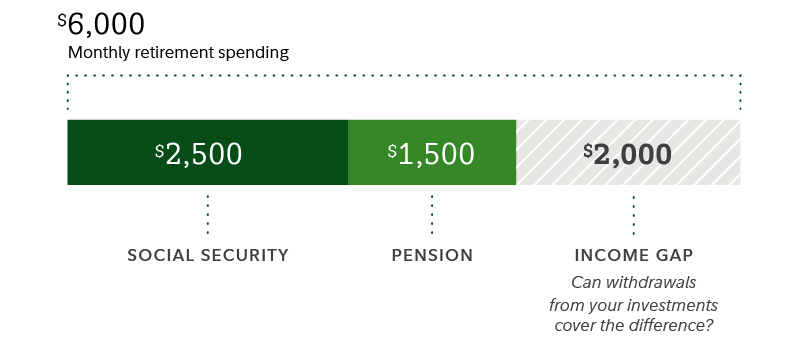
Corners Financial Planning financial planning software can help illustrate how retirement expenses may be covered by a combination of guaranteed income sources and withdrawals from savings and investments. The tool can also show how changes to your plan, such as delaying retirement, adjusting spending, or increasing guaranteed income, may affect the amount you need to withdraw from your portfolio. Retirement Checklist: The 5-step financial health test to take now
No single age or savings balance determines when you can retire. A more useful test is whether your expected income and savings can cover your spending, taxes, and health care for as long as your retirement may last.Start by estimating your expenses, subtracting guaranteed income, and determining the gap your savings may need to fill. Then test your plan at several retirement ages and under less favorable conditions.You may find that retiring sooner is possible or identify a few targeted changes that could bring your preferred date within reach.
